How to Practice Self-Therapy
How to Practice Self-Therapy
table of
contents
Most of us think of therapy as a formal process that takes place when one meets with a licensed professional regularly. We forget that the work of therapy must take place in our everyday lives for it to bring about radical transformation.
Working with a licensed professional has many benefits. It provides an opportunity to practice sharing vulnerable information with safe individuals. A therapist can identify patterns and share insights that facilitate the healing process. The structure of predetermined meetings can help with accountability. Additionally, therapists can help by teaching us various tools and techniques to manage our symptoms. Then, it becomes our responsibility to utilize them.
What is Self-Therapy?
Self-therapy refers to the intentional and structured process of engaging with one’s inner experiences to enhance self-awareness, foster healing, and support personal development. Self-therapy means creating space for honest reflection.
Successful self-therapy requires a commitment to creating a space free from interruptions. This means stepping away from everyday distractions and giving yourself your undivided attention (even if for only 5 minutes at a time).
Self-therapy practice invites you to choose curiosity over judgment, and self-compassion over self-beratement. Patience is essential, as the process rarely looks polished. Tangible, objective changes unfold slowly with practice over time.
Consistency is the foundation of success with self-therapy. The key to consistency is uncovering the modes of attunement that feel most intuitive, best suited to your natural preferences and your current circumstances. Getting there often requires experimentation and openness to trying different approaches.
Self-therapy can take many forms. There is a wide variety of techniques and strategies that one can implement. Let’s discuss a few self-therapy exercises.
Common Self-Therapy Methods
Journaling: Reflect on your experiences, values, and beliefs. Write about your thoughts and feelings to process your emotions. A classic example of a structured journaling exercise that helps people understand the connection between their thoughts, feelings, and behaviors is the ACB Method (Activating event, Beliefs, Consequences) in CBT (Cognitive Behavioral Therapy).
Reflect on the progress that you have been making. When you feel hopeless and defeated, force yourself to list 3-10 good things in your life. List out what you feel grateful for.
The Compendium guided journal series offers some guidance and structure with a low intimidation factor, allowing you to answer 2-3 questions, one page per day. This series includes pre-formated journals on the topics of self-compassion, gratitude, calm, confidence, and more.
Mindfulness and Meditation: Take time alone to be present with yourself (mind and body), turn your phone on “Do Not Disturb.” There are many different styles of meditative practice. Some examples include body scanning, sound meditation, or incorporating visualizations. Apps like Calm and Headspace offer guided series. You can also find guided meditations on Spotify or YouTube.
AI (Artificial Intelligence): Chatbots can offer personalized recommendations, insights, and exercises. These tools can help individuals reflect on their patterns, communicate more effectively with others, interpret dreams and challenging experiences. Consider the chatbot your creatively problem solving partner during difficult moments.
Cognitive Behavioral Techniques (CBT): Cognitive Restructuring is a practice that involves identifying distorted or negative thoughts and replacing them with more balanced, realistic ones. Behavioral activation is a technique that consists of setting realistic and achievable goals around engaging in uplifting pleasurable activities (like spending time with friends or going out for walks).
Self-Help Books: Find written work on a wellness or self-development topic you want to learn more about. Instead of passively reading, engage with the material. Many self-help books offer topic-specific exercises. Do them! Talk to a friend regularly about what you are learning, write about it, or find a way to apply what you learn in your everyday life. Here are a few general examples of self-development books:
- The Mountain Is You by Brianna Wiest (on the topic of self-sabotage)
- Attached by Amir Levine and Rachel S. F. Heller (on the topic of relationships)
- The Gifts of Imperfection by Brené Brown (on the topic of perfectionism)
Intentions, Affirmations, Mantras, and Prayer: Intentions are guiding principles that set a direction for your actions and mindset. Affirmations are positive statements that are repeated to challenge negative thoughts and reinforce new beliefs about oneself. Mantras are words or phrases that have meaning and are repeated, often during meditation or mindfulness practices. These directives can help to refocus a mindset and promote calm. Prayer is a spiritual practice that involves communicating with a higher power or the divine.
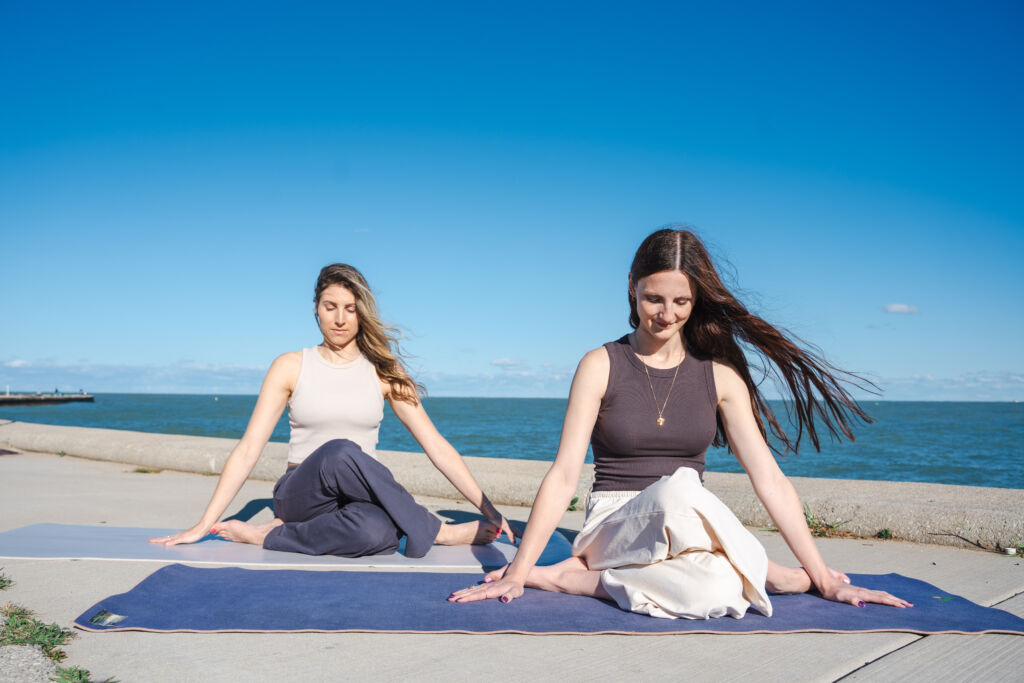
Movement-Based Therapies: There are many different styles of movement based self-attunement. Examples include yoga, Tai Chi, Belly Button Healing, and the Emotional Freedom Techniques (EFT). Progressive muscle relaxation (PMR) is a somatic technique where one systematically tenses and relaxes muscle groups to reduce physical tension, stress, and chronic pain.
Yoga combines physical postures, breathing exercises, and meditation to promote mind-body awareness, connection to the present moment, and physical wellness. If you are looking for an easy way to get started, check out the Yoga with Adriene videos on YouTube.
Apps: Technology exists that can help with reflection and reframing. We can utilize these tools to support our accountability and help us stay on track. A few examples include:
- Ahead: Emotions Coach
- Worry Watch: Anxiety & Mood
- Finch: Self-Care Pet
- Bearable – Symptom Tracker
- I Am Sober
Creative Expression: Creating art can be a form of emotional expression and release. Consider using drawing, painting, music, or dance as a way to connect with yourself and the present moment. Through engaging with art, it is possible to explore deeper states of consciousness.
Practical Next Steps
Self-therapy is a process and a practice. If you want to reprogram ingrained ways of thinking or patterns of behavior, consistent practice over time is imperative. The more often you participate, the more you will benefit.
Here are a few tips for building new habits (and a fun video on the topic):
- Start Small: Begin with a manageable task to avoid becoming overwhelmed. Gradually increase the challenge as you feel ready.
- Create a Routine: Incorporate the new habit into your daily routine at the same time each day or the same day each week to create consistency.
- Use Cues: Attach your new habit to an existing routine or event (e.g., every time you have your morning coffee, you set an intention for the day).
- Be Patient: Understand that building a new habit takes time. Be kind to yourself if you experience setbacks.
- Stay Flexible: If something isn’t working, be willing to adjust your approach without giving up.
- Goals and Tracking Progress: For some people, it may be helpful to define specific, measurable, and achievable goals around your new habit and monitor your progress over time.
When trying to determine which type of therapy is best for you, look for the least amount of resistance (which is not the same as no resistance, there will always be some resistance with trying something new). As you repeatedly use the same tool, the amount of resistance should decline gradually over time, rather than increase. If the amount of resistance is increasing, then it’s time to try a new tool.
Look for an activity you wouldn’t mind doing again and again because it is not enough to do it once. You’ll have to do it 1,000 times. And if you can do it 1,000 – 10,000 times… well, then, congratulations! You will have fundamentally changed the anatomy and physiology of your brain.
The more you participate in the work of self-therapy, the better your medications will work, and the more enriching you will find your life to be.
I hope that this work empowers you to take an active role in your own healing and personal growth.